

Heat Exchanger
What Is Heat Exchanger?
A heat exchanger is a device that enables effective heat energy transfer between two mediums without them mixing. It heats or cools something by transferring the heat energy through the process of conduction. For example, to keep a car engine cool.
Advantages of Heat Exchanger
Efficient heat transfer
Heat exchangers provide efficient heat transfer between fluids, maximizing the utilization of thermal energy and reducing energy wastage.
Temperature control
Heat exchangers allow precise control of fluid temperatures, ensuring optimal operating conditions for various industrial processes and systems.
Compact design
Heat exchangers can be designed to have a compact and space-saving structure, making them suitable for installations with limited space availability.
Versatility
Heat exchangers are versatile and can be designed for various applications, accommodating different fluid types, flow rates, and temperature ranges.
Cost savings
By recovering and reusing heat, heat exchangers can contribute to significant cost savings by reducing energy consumption and minimizing the need for additional heating or cooling equipment.
-
 Heat Exchanger EfficiencyThe term of heat exchanger efficiency explain as, the proportion between the quantity of heatAdd to Inquiry
 -
 Volumetric Heat ExchangerThe main principle of the internal heater of the volumetric heat exchanger is to improve the flowAdd to Inquiry
 -
 Shell Tube Heat ExchangerShell tube heat exchanger is currently the most widely used heat exchanger in chemical production.Add to Inquiry
 -
 Shell Tube Heat ExchangerShell and tube heat exchanger is currently the most widely used heat exchanger in chemicalAdd to Inquiry
 -
 Shell And Tube Type Heat ExchangerIt is an efficient and energy-saving equipment. Due to its strong structure, high elasticity andAdd to Inquiry
 -
 Volumetric Heat ExchangerVolumetric heat exchanger introduction In the heat exchanger series, the volume heat exchanger hasAdd to Inquiry
 -
 Volume Heat ExchangerVolume heat exchanger introduction High exchange efficiency Volume Heat Exchanger, The series ofAdd to Inquiry
 -
 Displacement Heat ExchangerDisplacement heat exchanger introduction Floating coil radiator used in the form of cantileverAdd to Inquiry
 -
 Volume Type Floating Coil Heat ExchangerVolume type floating coil heat exchanger introduction Volume type floating coil heat exchangerAdd to Inquiry
 -
 Shell And Tube CoolerShell and tube cooler introduction A shell and tube heat exchanger cooler is a class of heatAdd to Inquiry
 -
 Shell Tube CondenserShell tube condenser introduction Bundle of high-performance copper, steel, stainless steel tubesAdd to Inquiry
 -
 Tube In Tube CondenserTube in tube condenser Introduction Tube in tube condenser is the feature product in our company,Add to Inquiry
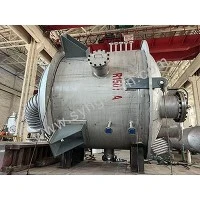

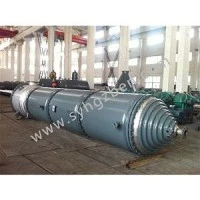
Why Choose Us
Our factory
The company was established in Wuxi, Jiangsu in 1998. The production base is located in Hudai Industrial Park, Binhu District, Wuxi City, covering an area of more than 18,000 square meters and a construction area of 15,000 square meters.
One-stop service
The company has strong technical strength and complete production and testing equipment. It can provide all kinds of chemical customers at home and abroad with a full range of design, manufacturing, installation, commissioning, and training services. Relying on high standards, high-quality products, reasonable prices, and high-quality services, it becomes your professional supplier and provides professional guarantees.
Certificate
The company has three types of pressure vessel manufacturing qualifications and has passed the ISO9001:2008 quality certification system.
Our service
The company takes modern scientific management as the guide, product quality as the premise, and professional after-sales guarantee as the standard. It continues to expand the market and is committed to providing customers with high-quality equipment and fast and efficient professional services.
Types of Heat Exchanger
Shell and tube heat exchangers
Shell and tube heat exchangers are composed of a shell (an outer vessel) with several tubes inside. One fluid flows through the tubes, while the other fluid flows around the tubes within the shell. This type of heat exchanger is highly versatile, robust, and finds extensive use across various industries.
Plate heat exchangers
Plate heat exchangers are made up of a series of stacked plates with alternate channels for hot and cold fluids. The plates offer a large surface area for heat transfer, making these exchangers compact and efficient. They are ideal for applications that require a high level of heat transfer.
Counterflow heat exchangers
In a counterflow arrangement, the hot and cold fluids enter the heat exchanger from opposite ends and flow in opposite directions. This setup maximizes the temperature difference between the fluids, leading to efficient heat transfer.
Finned tube heat exchangers
These exchangers feature tubes with extended surfaces known as fins. The fins increase the heat transfer area and enhance the efficiency of heat transfer. They are commonly used in applications involving air cooling and heating.
Parallel flow heat exchangers
In a parallel flow arrangement, both the hot and cold fluids enter the heat exchanger from the same end and flow parallel to each other. This results in a temperature difference that decreases along the length of the exchanger.
Crossflow heat exchangers
In a crossflow arrangement, one fluid flows across the flow path of the other fluid, resulting in a perpendicular flow pattern. This setup is commonly used in applications such as air conditioning systems and cooling towers.
What is the Flow Configuration of Heat Exchangers
Countercurrent flow
In countercurrent flow heat exchangers, the process and utility fluids move in opposite directions. This configuration is the most efficient and widely used because it maintains a large temperature difference between the fluids across the length of the heat exchanger, leading to more uniform heat transfer and reduced thermal stress. Additionally, it allows the cold fluid's outlet temperature to approach the hot fluid's inlet temperature (the highest temperature). Countercurrent flow also requires less surface area compared to the co-current flow configuration.
Co-current or parallel flow
In co-current or parallel-flow heat exchangers, the process and utility fluids flow in the same direction. This configuration is suitable when the outlet temperatures of both fluids are nearly equal. However, the temperature difference between the fluids is initially large at the inlet and decreases significantly along the length of the heat exchanger, leading to increased thermal stress and potential material failure. As a result, co-current flow is less efficient compared to countercurrent flow.
Cross flow
In co-current or parallel-flow heat exchangers, the process and utility fluids flow in the same direction. This configuration is suitable when the outlet temperatures of both fluids are nearly equal. However, the temperature difference between the fluids is initially large at the inlet and decreases significantly along the length of the heat exchanger, leading to increased thermal stress and potential material failure. As a result, co-current flow is less efficient compared to countercurrent flow.
Hybrid flow
Hybrid flow heat exchangers are created by manufacturers to combine the characteristics of the above-mentioned flow configurations. Examples of hybrid flow patterns are shell-and-tube heat exchangers, cross flow-counter flow, and multi-pass flow heat exchangers.
Application of Heat Exchanger
At home
Around the home, they're commonly found in central heating combi boilers and help to heat and cool down the water efficiently and safely. They're also found in your refrigerator, ensuring it stays at a stable, cool temperature.
Public spaces
You're also likely to have benefited from heat exchangers in public places. Your local swimming pool would be much colder without a heat exchanger helping to keep the water warm.
Car engines produce a lot of heat and this needs to be managed effectively to prevent dangers. Cars often use a combination of fans and air flow, with fins to dissipate heat, and the use of a coolant fluid.
Industrial
Heat exchangers are also used widely in different industrial applications. This includes power generation, the manufacture and storage of food, chemical engineering, and even in the running of air and marine transport, for example.
Defence
Even in the defence sector, we find heat exchangers. They are installed, for example, on the navy surface and auxiliary ships as well as on submarines. They cool nuclear submarine propulsion motors.
Components of Heat Exchanger
Shell
The shell is the outermost casing or housing of the heat exchanger. It typically has a cylindrical or rectangular shape and provides structural support for the internal components. The shell contains both the tube side and the shell side fluid inlets and outlets.
Tube sheets
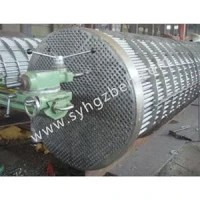
Tube sheets are thick, flat plates at the ends of the shell where the tubes are mounted. They serve to support and secure the tubes within the shell and create a seal to prevent leakage between the tube side and the shell side fluids.
Tubes
Tubes are the core components of the heat exchanger where heat transfer occurs. They are typically made of materials like copper, stainless steel, or various alloys. The tube side fluid flows through these tubes, and heat is transferred through the tube walls to the shell side fluid.
Baffles
Baffles are internal components, often in the form of metal plates or rods, which are placed inside the shell. Their primary purpose is to direct the shell side fluid flow and enhance heat transfer by creating turbulence. Baffles ensure that the shell side fluid passes over and around the tubes to maximize heat exchange efficiency.
Tube bundle
The collection of tubes, tube sheets, and baffles is often referred to as the tube bundle. It is the core heat transfer section of the heat exchanger, and it can be removed for maintenance and cleaning purposes.
End caps and channel covers
The ends of the shell are sealed with end caps or channel covers. These components prevent the shell side fluid from bypassing the tube bundle and ensure that it flows over the entire tube surface.
Material of Heat Exchanger

Alloy 600
Alloy 600 has excellent heat resistance and oxidation resistance up to temperatures of 1093°c. It's often recommended for use in the heat treatment industry (like furnace doors or rollers), but would be suitable for heat exchangers too.

Alloy c276
Alloy c276 is one of the most corrosion resistant alloys, which also demonstrated good thermal conductivity. We'd recommend it when one of the treated gases or liquids is particularly corrosive, like in the petrochemical or chemical processing industry.

Alloy 321 stainless steel
Alloy 321 is a stainless steel with great heat resistance at temperatures of up to 870°c, which makes it perfect for application in heat exchangers. It also demonstrates good thermal conductivity.
Regular inspection
Conduct routine visual inspections of the heat exchanger, including its external surfaces, connections, and internal components. Look for signs of leaks, corrosion, fouling, or other damage.
Cleaning
Implement a regular cleaning schedule to remove fouling, scaling, and deposits from heat exchanger surfaces. This can be done using methods such as chemical cleaning, mechanical cleaning, or online cleaning systems.
Tube cleaning
In tube-type heat exchangers, such as shell-and-tube exchangers, regularly clean the tubes to prevent blockages and improve heat transfer efficiency. Techniques include mechanical brushing, high-pressure water jetting, or chemical cleaning.
Plate cleaning
For plate heat exchangers, inspect and clean the plates to remove fouling and ensure optimal heat transfer performance. This may involve disassembling the plates for manual cleaning or using automated cleaning systems.
Chemical treatment
Implement chemical treatment programs to prevent corrosion, scale formation, and microbiological growth within the heat exchanger. Choose appropriate chemical inhibitors and biocides based on the specific operating conditions and fluid characteristics.
Inspection of gaskets and seals
Regularly inspect gaskets, seals, and o-rings for signs of wear, deterioration, or leakage. Replace any damaged or worn components to maintain the integrity of the heat exchanger seals.
Pressure testing
Periodically conduct pressure testing of the heat exchanger to ensure structural integrity and leak tightness. This helps identify any potential leaks or weaknesses in the system before they lead to larger issues.
Temperature and pressure monitoring
Continuously monitor temperature and pressure readings at various points within the heat exchanger system. Deviations from normal operating conditions may indicate potential problems that require attention.
Vibration analysis
Monitor vibration levels of rotating equipment such as pumps and fans associated with the heat exchanger. Excessive vibration can indicate mechanical issues that need to be addressed to prevent equipment failure.
Documentation and record-keeping
Maintain detailed records of maintenance activities, inspections, and any deviations from normal operating conditions. This information can help track the performance of the heat exchanger over time and identify recurring issues.
Training and education
Provide training for personnel responsible for heat exchanger maintenance on proper procedures, safety protocols, and troubleshooting techniques. Well-trained staff can identify problems early and perform maintenance tasks effectively.
Emergency response plan
Develop an emergency response plan outlining procedures for responding to leaks, equipment failures, or other emergencies involving the heat exchanger. Ensure that personnel are familiar with the plan and know how to execute it effectively.
What Material Properties Should You Look for In Heat Exchanger
Thermal conductivity
Thermal conductivity is the measure of a material's ability to transfer heat. Higher thermal conductivity materials allow more efficient heat transfer, which improves the performance of your design.
Corrosion resistance
Corrosion resistance is the measure of a material's ability to resist corrosion from chemical and environmental conditions and is especially critical if a heat exchanger will be subjected to harsh conditions.
Strength
Strength is the measure of a material's ability to resist mechanical forces. Increased mechanical strength is required for applications that contain fluids at high pressure or will be subjected to heavier loads.
Temperature resistance
Temperature resistance is the measure of a material's ability to withstand high temperatures without deformation or compromising strength.
Density//weight
Often, heat exchangers are designed for applications that require lightweight parts or where increases in weight decrease fuel efficiency — as with aerospace applications.
Cost and availability
Cost and availability are self explanatory — you always want the best functional materials at the lowest cost.
How to Choose a Heat Exchanger

Heat load
Determine the amount of heat that needs to be transferred based on the application requirements.
Fluid properties
Identify the properties of the fluids involved, such as flow rate, temperature, pressure, and composition.
Size and space constraints
Make sure the heat exchanger can be installed within the available physical space.
Material compatibility
Select materials that can withstand the operating conditions and prevent corrosion or contamination.
Pressure drop
Evaluate the allowable pressure drop of the heat exchanger to avoid excessive energy consumption.
Efficiency requirements
Determine the required heat transfer efficiency based on your application needs.
Cost and life cycle considerations
Consider the initial purchase price as well as the operating and maintenance costs over the expected lifetime.

How the Heat Exchanger Works
Heat exchanger functions by transferring heat from higher to lower temperatures. Heat can thus be transferred from the hot fluid to the cold fluid if a hot fluid and a cold fluid are separated by a heat-conducting surface.
The operation of a heat exchanger is governed by thermodynamics. Heat can be transferred with the help of conduction, convection, or radiation. Conduction is the transfer of thermal energy from one material to another through the motion of a fluid such as heated air or water.
Convection is the transfer of thermal energy from one surface to another through the motion of a fluid such as heated air or water, and thermal radiation is a heat energy transfer mechanism characterised by the emission of electromagnetic waves from a heated surface or object.
The laws of thermodynamics are the fundamental concepts that underpin heat exchangers.
The Zeroth Law of Thermodynamics states that in thermal equilibrium, thermodynamic systems have the same temperature. If two systems are in thermal equilibrium with a third system, the two former systems must also be in thermal equilibrium with one another; hence, all three systems are at the same temperature.
The First Law of Thermodynamics states that energy cannot be created or destroyed, but it can be transmitted from one medium to another, such as heat.
The Second Law of Thermodynamics establishes entropy (S) as an additional property of thermodynamic systems, which describes a closed thermodynamic system’s natural invariable tendency to increase in entropy over time.
Safety Precautions When Using the Heat Exchanger
Review the manufacturer’s guidelines
Examine the heat exchanger user manual and other manufacturer documentation to gather specific instructions and recommendations for maintenance procedures, suitable chemical cleaning agents, and safety precautions. Developing a heat exchanger maintenance checklist based on these steps ensures a consistent chemical cleaning process is always followed and avoids problems such as cracked heat exchangers.
Wear protection
Follow plant policy for personal protective equipment (ppe) such as safety goggles, gloves, and a respirator mask. Also, check any chemicals and cleaning solvent labeling or machinery for additional ppe needs.
Shut off and isolate
Make sure all inlet valves are securely fastened and tagged. Close the supply and return water valves. Position a ball valve on the low point of the heat exchanger, which will serve as an entry point for the cleaning agent and will prevent backflow. Shutting off all valves and isolation points to stop the flow of fluids through the system ensures a safe and inactive heat exchanger during the tube cleaning process. And lockout and tagout any electrical.
Perform a visual inspection
A heat exchanger risk assessment checks for visible signs of damage, such as corrosion, cracks, or other abnormalities. Check for fouling or corrosion and identify the fouling to determine the optimal cleaning method. This may include chemical or mechanical cleaning or a combination of both: Test inlet and outlet temperatures. Inspect tubes for damage and replace them if needed.
Release pressure and drain fluids
Ensure the heat exchanger’s pressure goes down using a safety relief device, checking that the pressure relief valve reads zero. Wait until the system cools before doing anything else to minimize exposure to hot fluids. High-pressure cleaning can reduce safety.
Attach hoses
Using a descaling system, which is chemical safe, attach a circulation hose to pump fluid into the bottom and return fluid from the top. The exit point must be at the exchanger’s highest point. This ensures the cleaning agent comes in contact with all interior wetted surfaces and that upper interior areas do not become air-bound with co2 or foaming.
Fill up and test
Fill the heat exchanger with water and perform a hydrostatic test by turning on the pump and circulating the water. This action assures the exchanger is isolated and none of the cleaning agents will be needlessly lost. Bleed-off water equal to the volume of chemicals required for cleaning. If too much water is bled off, add some back in to complete the circulation loop. Additional water may be needed during the cleaning process as deposits are dissolved to make sure dissolved deposits do not stick somewhere within the system.
Check it out
Periodically check isolation valves as they may have initially seated against the scale. As chemicals dissolve the scale, this action will help prevent product loss.
Give it time
Allow sufficient cleaning time. Circulate the cleaning agent for the recommended timeframe.
Rinse thoroughly
Empty the heat exchanger of dangerous chemicals after the solution has completed its job. To flush the heat exchanger, turn off the circulation pump, remove the return hose from the recirculation system, and put it in a drain. Add a freshwater hose to the recirculation bucket on the pump system and turn the pump back on. Run clean water through the heat exchanger until the return water is clear.This action will also flush out the pump system. As an added safeguard, technicians can reverse the hoses so they pump into the top and out the bottom. This will flush away debris that has settled on the bottom.
Inspect and reassemble
To avoid leaking, carefully install a new gasket focusing on the head. Poor installation can cause leakage. Disconnect the hoses. Close the valves used in circulation and open the valves for water supply. The heat exchanger can now be returned to service.
Test and restart
Perform required system checks and tests as the manufacturer recommends to ensure the heat exchanger functions properly. Once verified, restart the system while monitoring it closely for irregularities.
Follow the law
As the above steps are carried out, be sure to follow all local regulations for discharge. These can vary from city to city and state to state.
Our Factory
The company was established in 1998 in Wuxi, Jiangsu,Production base is located in Hu Dai Industrial Park,Binhu District of Wuxi City.It covers an area over 18,000 square meters, construction area of 15,000 square meters, there are modern office, design integrated services building and a high standard of pressure equipment manufacturing plant, Comply with China and the world pressure vessel standards, regulate the production,Including heat exchanger (tube type, spiral plate type), the reactor, vacuum rake dryer and other types of chemical industry required containers,At the same time also provide ASIME and other international standards products.
Company with strong technical force, complete production testing equipment,Can provide all kinds of chemical industry at home and abroad customers a full range of design, manufacture, installation, commissioning, training of train services,Relies on high standards, high-quality products, reasonable prices and high quality service to become your professional supplier and provide professional protection.


FAQ
We're well-known as one of the leading heat exchanger manufacturers and suppliers in China. Welcome to buy high quality heat exchanger at competitive price from our factory. Contact us for more cheap products.
drum dryer maintenance, chemical mixing equipment, drum dryer performance